By: OKN Team
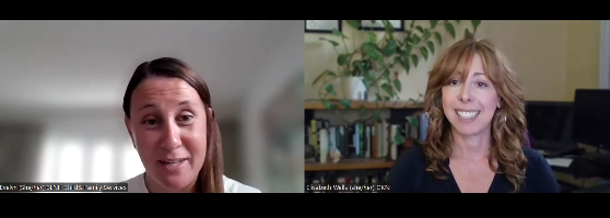
When we spoke with Evelyn Bursey, Manager of Children’s Inclusion Services within Child and Family Services at Community Living North Halton and co-chair of the Early Intervention and Support Working Group, one thing quickly became clear: her interest in this work is rooted in the power of bringing the community together.
For Evelyn, joining the OKN Early Years Resiliency Action Table (EYRAT) felt like a natural next step.
She had already been involved in previous community efforts focused on young children and families, including the Birth to School Toolkit and Committee and the Early Years Mental Health Committee. When those committees took a brief hiatus and planning began for what would come next, she was eager to see what might emerge.
When she learned about EYRAT and its working groups, “it made so much sense that would be the next step,” she says. The opportunity to co-chair the Early Intervention and Support Working Group alongside Allison Corcoran from Halton Region was a natural fit, but so was the broader vision of bringing the community together around shared work.
“As a community, we’re all there,” Evelyn explains. “We’re not doing this work separately. We’ve come to this place of really being a tight-knit collaborative.”
An “Aha” Moment
Recently, the working group has been learning from communities across Ontario about different approaches to integrated pathways for children from birth to age six.
Those conversations have led to new ideas, new questions and, as Evelyn describes them, several “aha” moments.
One recent discussion focused on a pathway for early years mental health that had been developed in another community. As members explored that approach, the conversation began to expand.
If a pathway was being developed around one particular need, what about the other needs a child and family may have? Should pathways be built around specific services, or should they be designed around the child and family’s overall experience?
That conversation brought the group back to a central question: what would it look like to create a pathway for the whole child?
A Pathway for the Whole Child
Children’s development, mental health, communication skills, social-emotional well-being and family circumstances are deeply interconnected. Creating separate pathways for separate needs may make sense from a systems perspective, but families experience those needs as part of a whole.
That is why the working group is exploring how pathways can be designed with the child and family’s overall experience in mind.
Families often don’t know which organization provides which service, and frankly, they shouldn’t need to.
As Evelyn puts it, families are not concerned about which “door” they enter, as long as it is the one that gets them to the support they need.
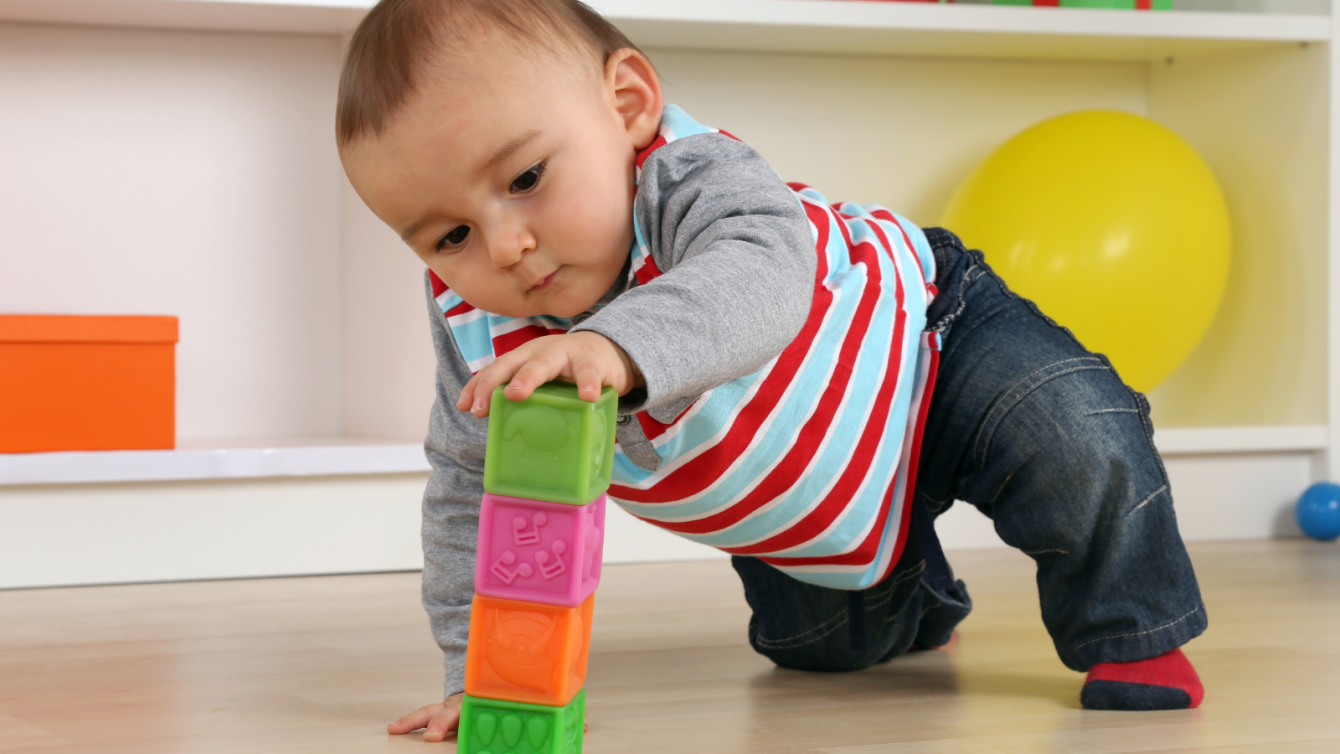
This shift toward whole-child thinking challenges partners to consider how services can be designed in ways that are more integrated, coordinated and family-centred. Rather than asking families to understand the complexities of the system or navigate separate lanes, the goal is for the system to work more effectively around families.
Early intervention is most effective when support is accessible, timely and easy to navigate. By bringing partners together to co-design pathways and strengthen coordination, the Early Intervention and Support Working Group is exploring how to make the experience of accessing services simpler and more seamless.
This approach puts families at the centre while allowing service providers to work collaboratively behind the scenes.
Moving beyond Silos
For Evelyn, the work is also about participation.
The solutions being developed today will help shape how supports are delivered for young children and families in the future. That is why broad engagement from organizations across sectors remains so important.
“We want to move away from silos,” she says.
If organizations are not part of the conversation, Evelyn points out, they risk becoming recipients of an outcome rather than helping to shape it.
Instead, the opportunity is to work side by side with partners and bring different perspectives to the table from the beginning.
“How do we do that? We show up at the table together.”
Ultimately, Evelyn says, “you want to be someone who’s actively shaping those outcomes with your partners.”
Looking Ahead
As the OKN Early Years Resiliency Action Table continues to move forward, there is a growing sense of momentum and possibility.
For Evelyn, that momentum is something she can feel.
“I can’t even put into words the kind of palpable enthusiasm at this table of the way our community envisions and hopes to see this realized for our community and for our youngest population.”
There is still much work ahead. But the enthusiasm, expertise and commitment around the table point to a shared vision: one where families experience supports as connected rather than fragmented, where organizations work together around common goals, and where children are seen and supported as whole people.
The work is still taking shape. And that is precisely why this is such an important moment to be part of it.
Because when we start with the whole child, we create stronger pathways for everyone.
After all, children don’t come in boxes.
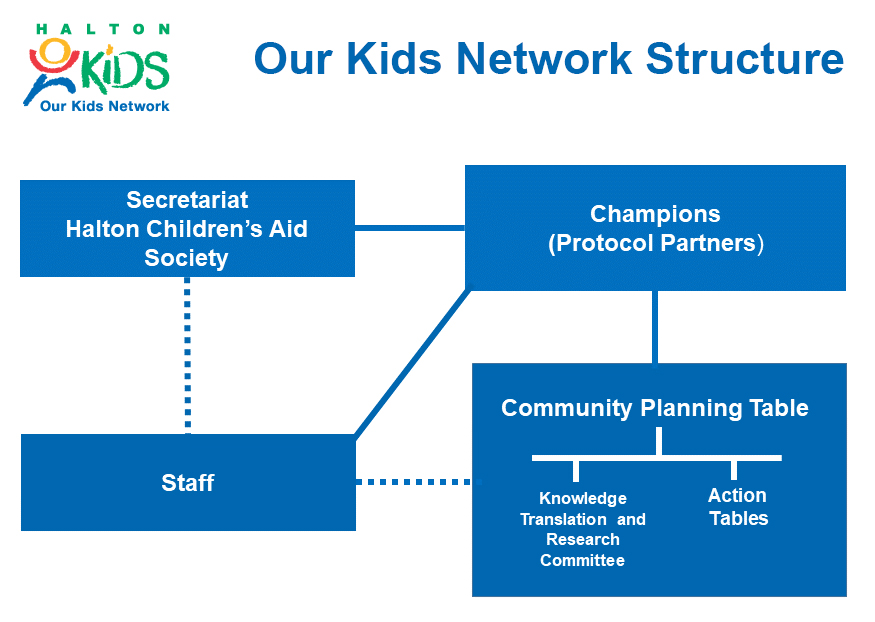
As the backbone organization for the Early Years Resiliency Action Table, OKN brings partners together, facilitates collective learning, and creates the conditions for community partners to move from shared understanding to collective action.
The Table was established to strengthen outcomes for young children and families across Halton by bringing community partners together around shared priorities and collective action.
The table’s work is informed by community data and local knowledge, including findings from the Early Development Instrument (EDI) and the Kindergarten Parent Survey. Together, these sources help identify strengths, emerging needs, and opportunities to better support children’s healthy development and well-being.
For more information, visit the OKN Early Years Resiliency Action Table.